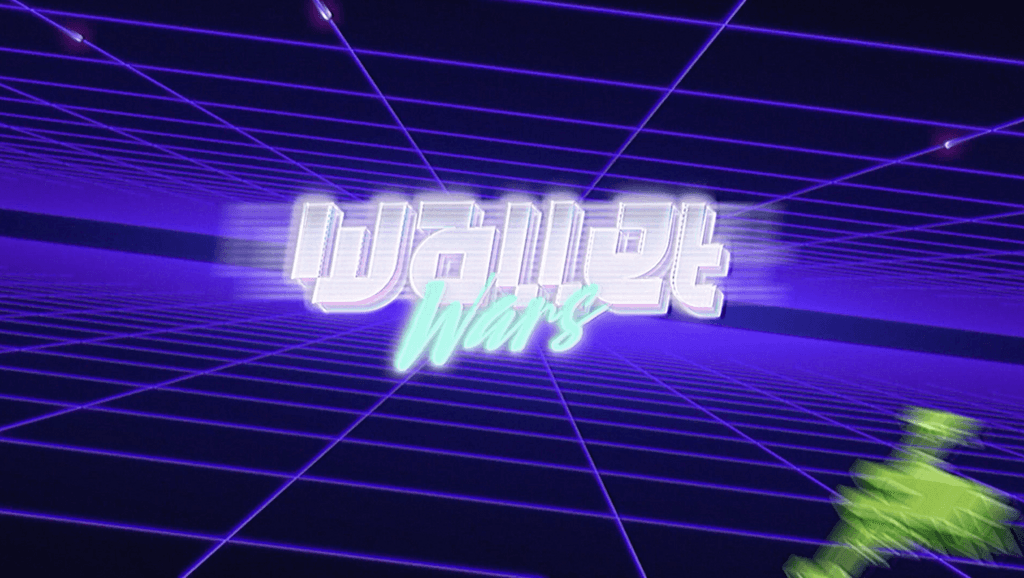
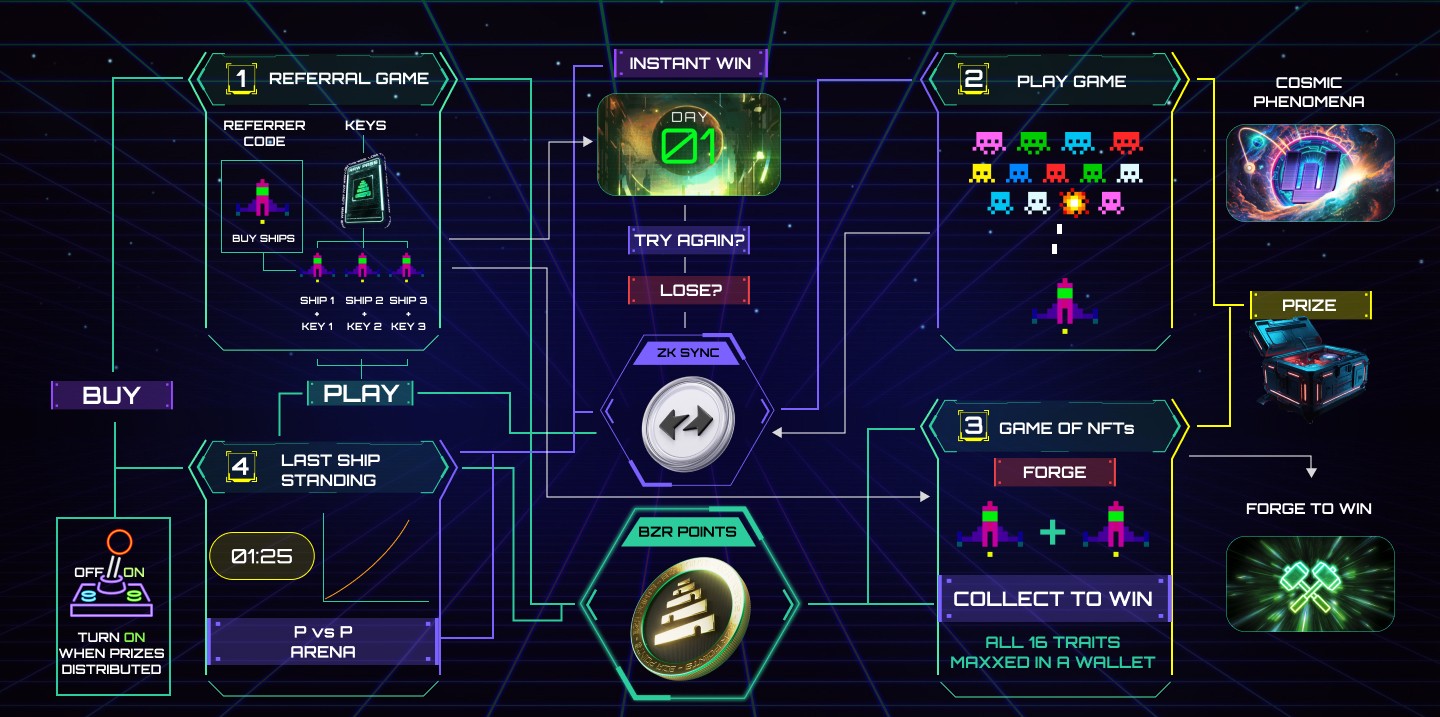
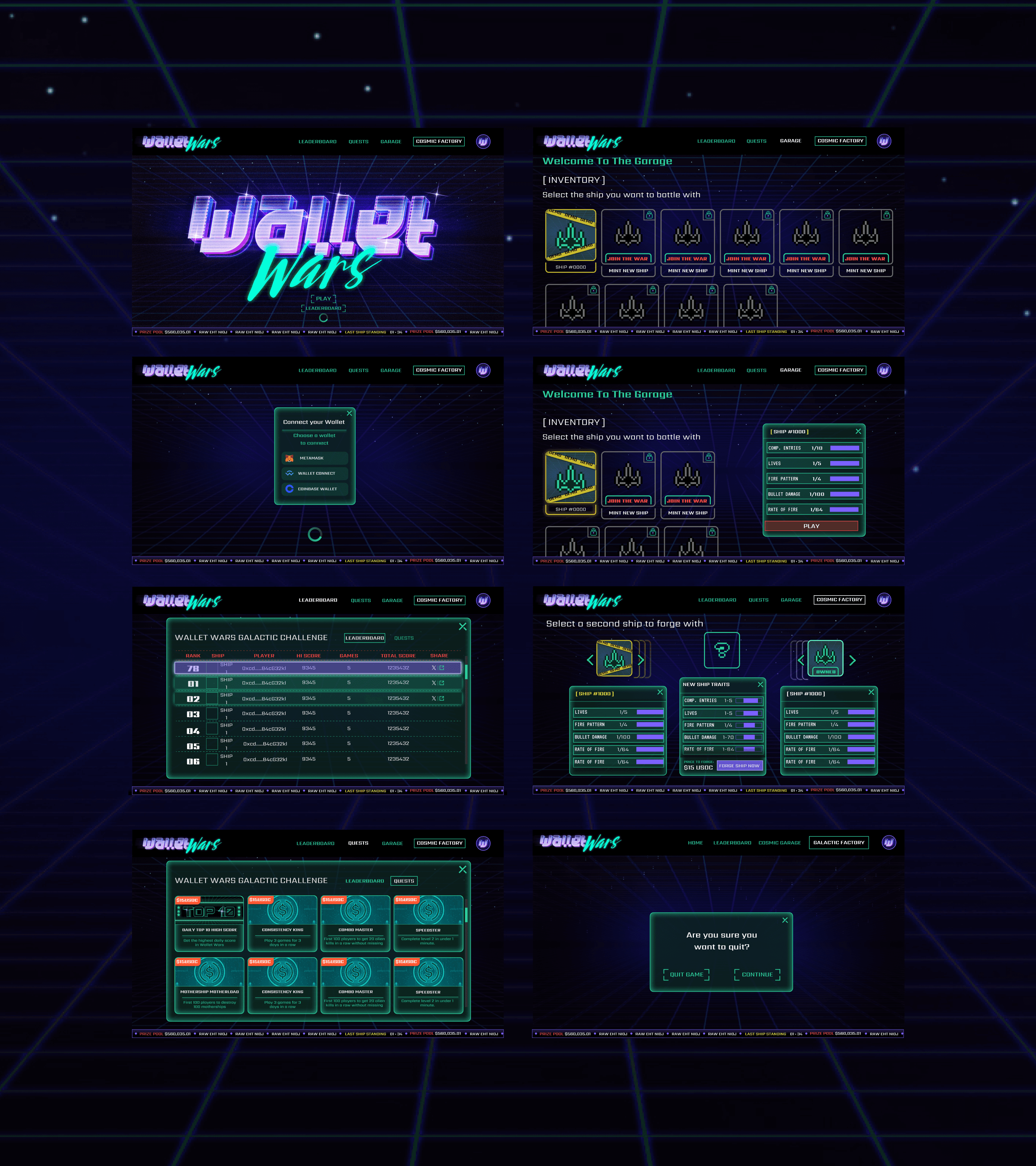
Wallet Wars is a Web3 arcade‑inspired game where players compete, collect assets, and earn rewards through blockchain‑powered gameplay. The goal of this project was to design a clear, intuitive, and visually engaging UI system that merges retro arcade energy with modern crypto functionality.

About the project
Project Objective
The team wanted to reimagine the spirit of classic 1980s arcade games, fast, reactive, skill‑based, and bring it into a Web3 environment where players can own, trade, and upgrade their in‑game assets.
My role was to design:
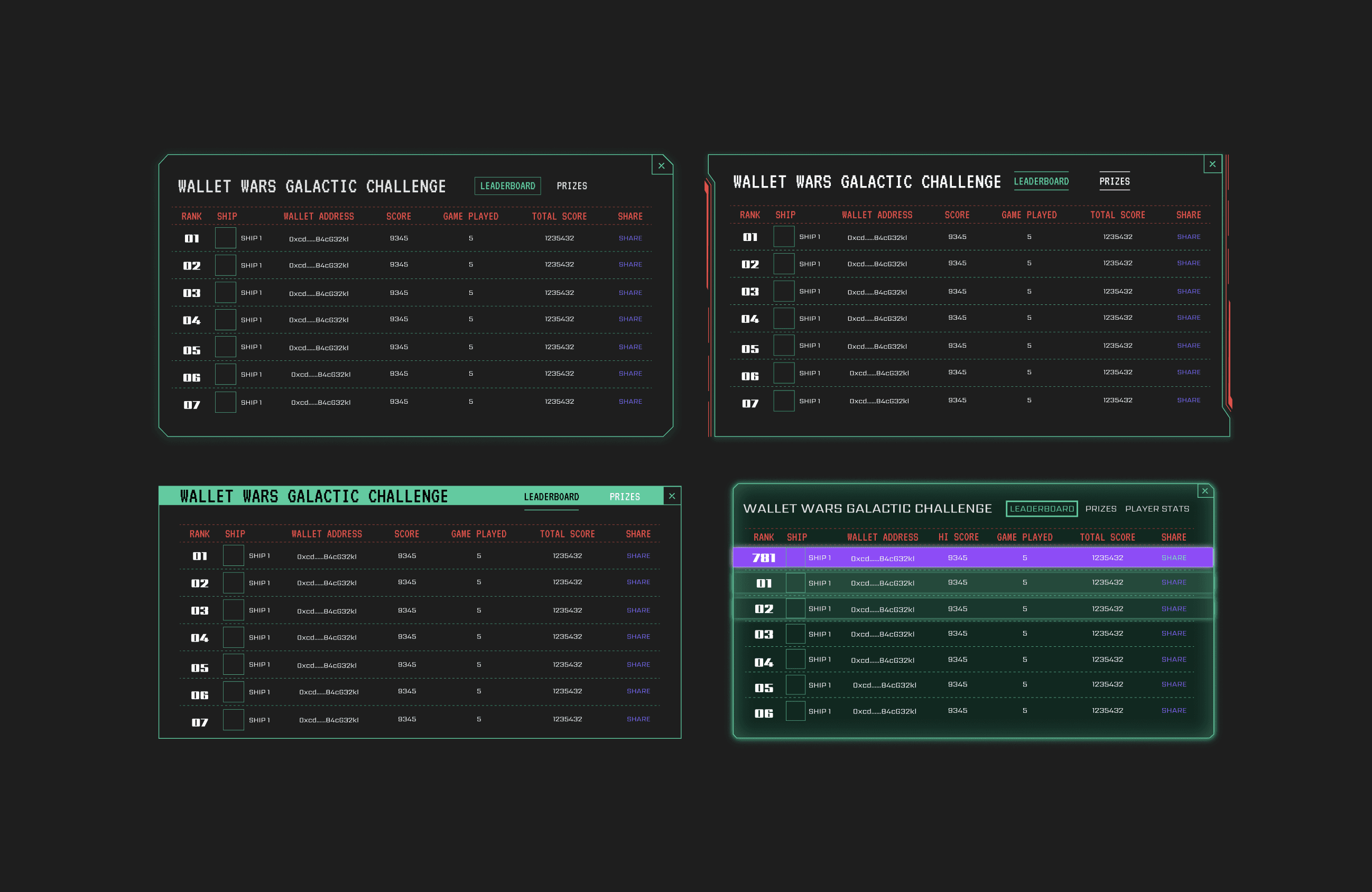
A dashboard UI/UX that serves as the player’s main command center
A mobile‑first interface for on‑the‑go gameplay
A visual identity that blends arcade nostalgia with modern digital ownership
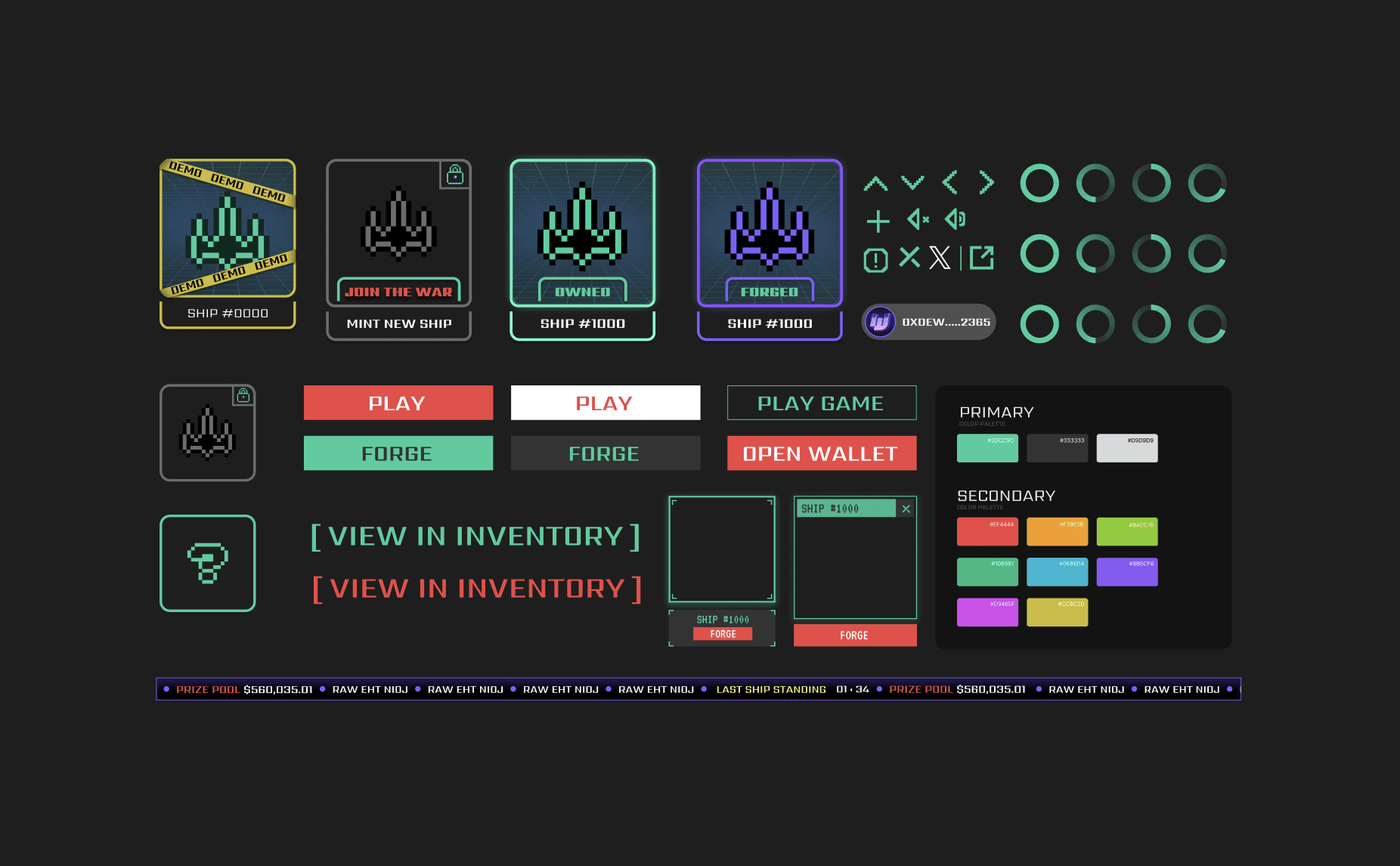
NFT asset visuals for ships, passes, and in‑game items
The challenge was to create a UI that feels fun and energetic while still supporting the complexity of blockchain‑based systems.
---
Key Features & UX Challenges
1. Dashboard as a Command Center
Players needed a single place to:
View owned ships and assets
Track rewards and progress
Manage their RAWPASS
Launch into gameplay instantly
The dashboard had to feel like a control panel, structured, readable, and responsive, without overwhelming new players.
2. Integrating Web3 Without Friction
Web3 games often suffer from confusing flows. To avoid this:
Wallet connections were simplified
Asset ownership states were clearly labeled
Transaction‑related actions were grouped and visually separated
Tooltips and micro‑interactions were added to guide new users
The goal was to make blockchain mechanics feel invisible and intuitive.
3. Designing NFT Assets as Usable UI Elements
Ships and in‑game items are not just collectibles, they are functional game components.
The UI needed to:
Display rarity and stats clearly
Support upgrades and modifications
Show ownership and tradability states
Scale across desktop and mobile
This required a modular card system that adapts to different asset types.
4. Mobile‑First Gameplay
Because players engage frequently and casually, the UI was optimized for mobile:
Thumb‑reach zones
Simplified navigation
Condensed card layouts
Quick‑access actions for battles and upgrades
The mobile version maintains the same visual identity while prioritizing speed and clarity.
---
Visual Direction
Arcade‑Inspired, Modernized
The visual identity draws from classic arcade games but avoids retro clichés.
Key decisions:
High‑contrast neon accents
Pixel‑inspired shapes used subtly in UI elements
Clean typography for readability
Motion cues inspired by arcade transitions
A dark, energetic palette to support the game’s theme
The result is a UI that feels nostalgic but still modern and product‑ready.
---
Outcome
The final Wallet Wars UI system delivers:
A cohesive dashboard experience for managing assets and gameplay
A mobile‑first interface optimized for quick actions
A visual identity that bridges arcade culture and Web3 technology
NFT asset cards that are functional, readable, and scalable
A smoother onboarding experience for players new to blockchain gaming
The project successfully transforms a retro arcade concept into a modern, Web3‑enabled game ecosystem.
Smooth Scroll
This will hide itself!
This will hide itself!
Wallet Wars (Brand Design/UI Design)
OVERVIEW
Wallet Wars is a Web3 arcade‑inspired game where players compete, collect assets, and earn rewards through blockchain‑powered gameplay. The goal of this project was to design a clear, intuitive, and visually engaging UI system that merges retro arcade energy with modern crypto functionality.
About the project
Project Objective
The team wanted to reimagine the spirit of classic 1980s arcade games, fast, reactive, skill‑based, and bring it into a Web3 environment where players can own, trade, and upgrade their in‑game assets.
My role was to design:
A dashboard UI/UX that serves as the player’s main command center
A mobile‑first interface for on‑the‑go gameplay
A visual identity that blends arcade nostalgia with modern digital ownership
NFT asset visuals for ships, passes, and in‑game items
The challenge was to create a UI that feels fun and energetic while still supporting the complexity of blockchain‑based systems.
---
Key Features & UX Challenges
1. Dashboard as a Command Center
Players needed a single place to:
View owned ships and assets
Track rewards and progress
Manage their RAWPASS
Launch into gameplay instantly
The dashboard had to feel like a control panel, structured, readable, and responsive, without overwhelming new players.
2. Integrating Web3 Without Friction
Web3 games often suffer from confusing flows. To avoid this:
Wallet connections were simplified
Asset ownership states were clearly labeled
Transaction‑related actions were grouped and visually separated
Tooltips and micro‑interactions were added to guide new users
The goal was to make blockchain mechanics feel invisible and intuitive.
3. Designing NFT Assets as Usable UI Elements
Ships and in‑game items are not just collectibles, they are functional game components.
The UI needed to:
Display rarity and stats clearly
Support upgrades and modifications
Show ownership and tradability states
Scale across desktop and mobile
This required a modular card system that adapts to different asset types.
4. Mobile‑First Gameplay
Because players engage frequently and casually, the UI was optimized for mobile:
Thumb‑reach zones
Simplified navigation
Condensed card layouts
Quick‑access actions for battles and upgrades
The mobile version maintains the same visual identity while prioritizing speed and clarity.
---
Visual Direction
Arcade‑Inspired, Modernized
The visual identity draws from classic arcade games but avoids retro clichés.
Key decisions:
High‑contrast neon accents
Pixel‑inspired shapes used subtly in UI elements
Clean typography for readability
Motion cues inspired by arcade transitions
A dark, energetic palette to support the game’s theme
The result is a UI that feels nostalgic but still modern and product‑ready.
---
Outcome
The final Wallet Wars UI system delivers:
A cohesive dashboard experience for managing assets and gameplay
A mobile‑first interface optimized for quick actions
A visual identity that bridges arcade culture and Web3 technology
NFT asset cards that are functional, readable, and scalable
A smoother onboarding experience for players new to blockchain gaming
The project successfully transforms a retro arcade concept into a modern, Web3‑enabled game ecosystem.
Smooth Scroll
This will hide itself!
This will hide itself!
Wallet Wars (Brand Design/UI Design)
OVERVIEW
Wallet Wars is a Web3 arcade‑inspired game where players compete, collect assets, and earn rewards through blockchain‑powered gameplay. The goal of this project was to design a clear, intuitive, and visually engaging UI system that merges retro arcade energy with modern crypto functionality.
About the project
Project Objective
The team wanted to reimagine the spirit of classic 1980s arcade games, fast, reactive, skill‑based, and bring it into a Web3 environment where players can own, trade, and upgrade their in‑game assets.
My role was to design:
A dashboard UI/UX that serves as the player’s main command center
A mobile‑first interface for on‑the‑go gameplay
A visual identity that blends arcade nostalgia with modern digital ownership
NFT asset visuals for ships, passes, and in‑game items
The challenge was to create a UI that feels fun and energetic while still supporting the complexity of blockchain‑based systems.
---
Key Features & UX Challenges
1. Dashboard as a Command Center
Players needed a single place to:
View owned ships and assets
Track rewards and progress
Manage their RAWPASS
Launch into gameplay instantly
The dashboard had to feel like a control panel, structured, readable, and responsive, without overwhelming new players.
2. Integrating Web3 Without Friction
Web3 games often suffer from confusing flows. To avoid this:
Wallet connections were simplified
Asset ownership states were clearly labeled
Transaction‑related actions were grouped and visually separated
Tooltips and micro‑interactions were added to guide new users
The goal was to make blockchain mechanics feel invisible and intuitive.
3. Designing NFT Assets as Usable UI Elements
Ships and in‑game items are not just collectibles, they are functional game components.
The UI needed to:
Display rarity and stats clearly
Support upgrades and modifications
Show ownership and tradability states
Scale across desktop and mobile
This required a modular card system that adapts to different asset types.
4. Mobile‑First Gameplay
Because players engage frequently and casually, the UI was optimized for mobile:
Thumb‑reach zones
Simplified navigation
Condensed card layouts
Quick‑access actions for battles and upgrades
The mobile version maintains the same visual identity while prioritizing speed and clarity.
---
Visual Direction
Arcade‑Inspired, Modernized
The visual identity draws from classic arcade games but avoids retro clichés.
Key decisions:
High‑contrast neon accents
Pixel‑inspired shapes used subtly in UI elements
Clean typography for readability
Motion cues inspired by arcade transitions
A dark, energetic palette to support the game’s theme
The result is a UI that feels nostalgic but still modern and product‑ready.
---
Outcome
The final Wallet Wars UI system delivers:
A cohesive dashboard experience for managing assets and gameplay
A mobile‑first interface optimized for quick actions
A visual identity that bridges arcade culture and Web3 technology
NFT asset cards that are functional, readable, and scalable
A smoother onboarding experience for players new to blockchain gaming
The project successfully transforms a retro arcade concept into a modern, Web3‑enabled game ecosystem.
Smooth Scroll
This will hide itself!
This will hide itself!